Retirement Risk Looks Different Today
Retirement planning has changed significantly over the past several decades. Longer life expectancies, rising inflation, market volatility, and uncertainty around monetary policy have increased the pressure on traditional retirement strategies. Many investors are now asking how to better protect their savings rather than simply grow them.
Precious metals have become part of that conversation because they offer characteristics that differ from conventional retirement assets. Gold and silver, in particular, have long histories as stores of value during periods of economic stress.
Precious Metals and Inflation Protection
Inflation erodes purchasing power over time. When the cost of goods and services rises faster than savings grow, retirement income can lose real value. Precious metals have historically been viewed as a hedge against inflation because their supply is limited and they are not tied to any single currency.
Gold has often maintained purchasing power during inflationary periods, while paper currencies have weakened. This relationship is one reason precious metals are frequently used as a defensive component within retirement portfolios.
Reducing Reliance on Financial Markets
Most retirement accounts are heavily exposed to stocks and bonds. While these assets can perform well over long periods, they are also sensitive to market cycles, interest rate changes, and economic shocks.
Precious metals tend to behave differently from traditional financial assets. Their value is not based on corporate earnings or debt instruments. By adding precious metals, investors reduce reliance on a single system and spread risk across asset classes with different drivers. This diversification can help smooth portfolio performance during periods of heightened volatility.
Tangible Assets and Real Ownership
One of the defining features of precious metals is their physical nature. Gold and silver are tangible assets that exist outside of digital systems and financial intermediaries. This tangibility matters to many retirement investors, especially those focused on long-term wealth preservation.
Physical precious metals do not depend on the solvency of a company or the performance of a fund manager. Ownership is direct and clear, whether metals are held for home delivery or stored on behalf of a retirement account.
Using Precious Metals in Retirement Accounts
Precious metals can be incorporated into retirement planning through self-directed retirement accounts that allow physical assets. A Precious Metals IRA enables investors to hold approved gold and silver while retaining the tax advantages associated with traditional retirement structures.
When used appropriately, this approach allows investors to balance growth-oriented assets with assets designed for stability and preservation.
A Long-Term Perspective
Precious metals are generally not viewed as short-term trading instruments within retirement planning. Their value lies in long-term protection, diversification, and resilience across economic cycles.
For pre-retirees and retirees, this long-term perspective is especially important. Preserving purchasing power and reducing downside risk often becomes more critical than aggressive growth.
Education Before Allocation
Deciding how much of a retirement portfolio to allocate to precious metals requires careful consideration. Factors such as age, income needs, overall asset mix, and risk tolerance all play a role.
At Freedom Gold USA, the focus is on education and informed decision-making. Investors receive clear explanations of how precious metals work within retirement strategies, along with guidance tailored to individual goals.
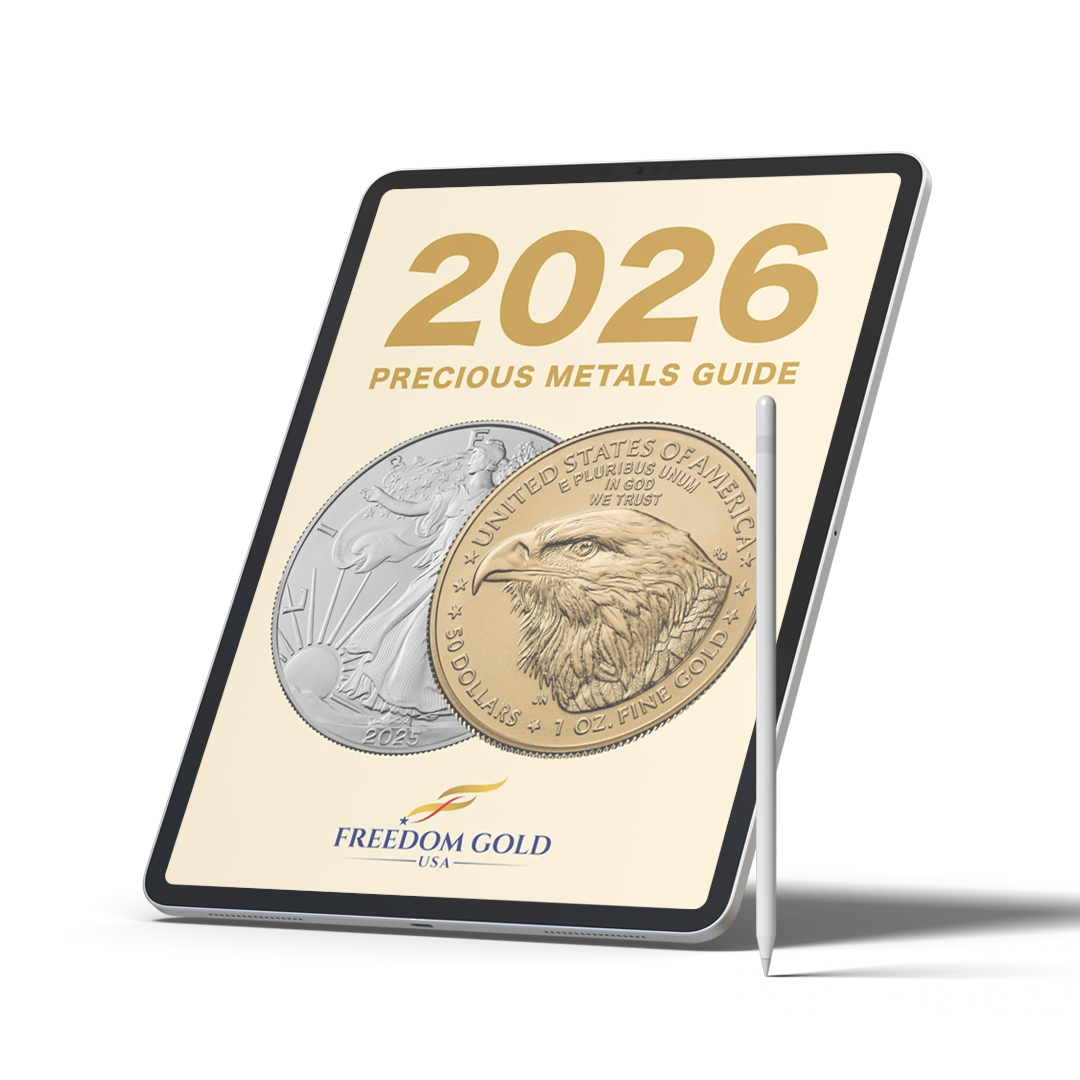
If you are exploring ways to protect your retirement savings with precious metals, request the Free Gold and Silver Investor’s Guide from Freedom Gold USA to learn how gold and silver may support long-term financial security and peace of mind.