Federal Employees Have a Unique Retirement Situation
Most of the rollover conversations we have start with 401(k)s. That makes sense — it is the most common employer-sponsored plan in the country. But we work with a segment of clients who have a fundamentally different retirement vehicle: the Thrift Savings Plan, or TSP. And a TSP rollover to a Gold IRA follows its own set of rules that are worth understanding before you make a move.
If you are a federal civilian employee or a member of the military, you have been contributing to the TSP. It is one of the largest retirement plans in the world by assets, and in many ways it is a solid, low-cost vehicle. But it is also extraordinarily limited in terms of what you can invest in. You get a small menu of index funds and lifecycle funds. That is it. No individual stocks, no real estate, no precious metals.
For the investors we work with who are worried about inflation, dollar devaluation, and what happens to paper-based assets in an economic downturn, that limitation feels like a cage. The good news is that once you separate from federal service — or in some cases even while you are still employed — you have options.
Can You Actually Roll a TSP Into a Gold IRA?
Yes. But the details matter.
The TSP has strict rules about in-service withdrawals. If you are still actively employed as a federal worker, you generally cannot roll your TSP balance into an outside IRA. There are limited exceptions — financial hardship withdrawals, age-based in-service withdrawals once you reach 59½ — but for the most part, the rollover door opens when you separate from service, retire, or reach the right age threshold.
Once you are eligible, the process works like this. You initiate a direct rollover from your TSP account to a self-directed IRA custodian. “Direct rollover” is the key phrase here. You never want the TSP to cut a check to you personally. If they do, you have 60 days to deposit those funds into a qualifying IRA, and 20% will be withheld for taxes in the meantime. You would need to make up that 20% out of pocket to avoid a taxable event. That is a common and costly mistake.
A direct rollover sidesteps all of that. The funds move custodian-to-custodian, and the IRS does not treat it as a distribution. No taxes. No penalties. The IRS outlines the rollover rules clearly in Publication 590-A, and we walk every client through the specifics before anything is set in motion.
The Role of the Self-Directed IRA Custodian
This part confuses people. A traditional IRA at a brokerage is managed by that brokerage — they handle investments, hold assets, and report to the IRS. A self-directed IRA is different. The custodian’s job is administrative: they hold the account, process transactions, file required reports, and ensure IRS compliance. They do not pick your investments.
That means you choose the assets. In the case of a Gold IRA, that means IRS-approved precious metals: gold, silver, platinum, and palladium meeting specific purity standards, held in an approved depository.
At Freedom Gold USA, we coordinate directly with approved custodians on your behalf. We have done this process many times. The paperwork, the custodian communication, the metal selection — we handle the heavy lifting. Your job is to tell us your goals. We take it from there.
What Happens to Your TSP Funds Inside a Gold IRA
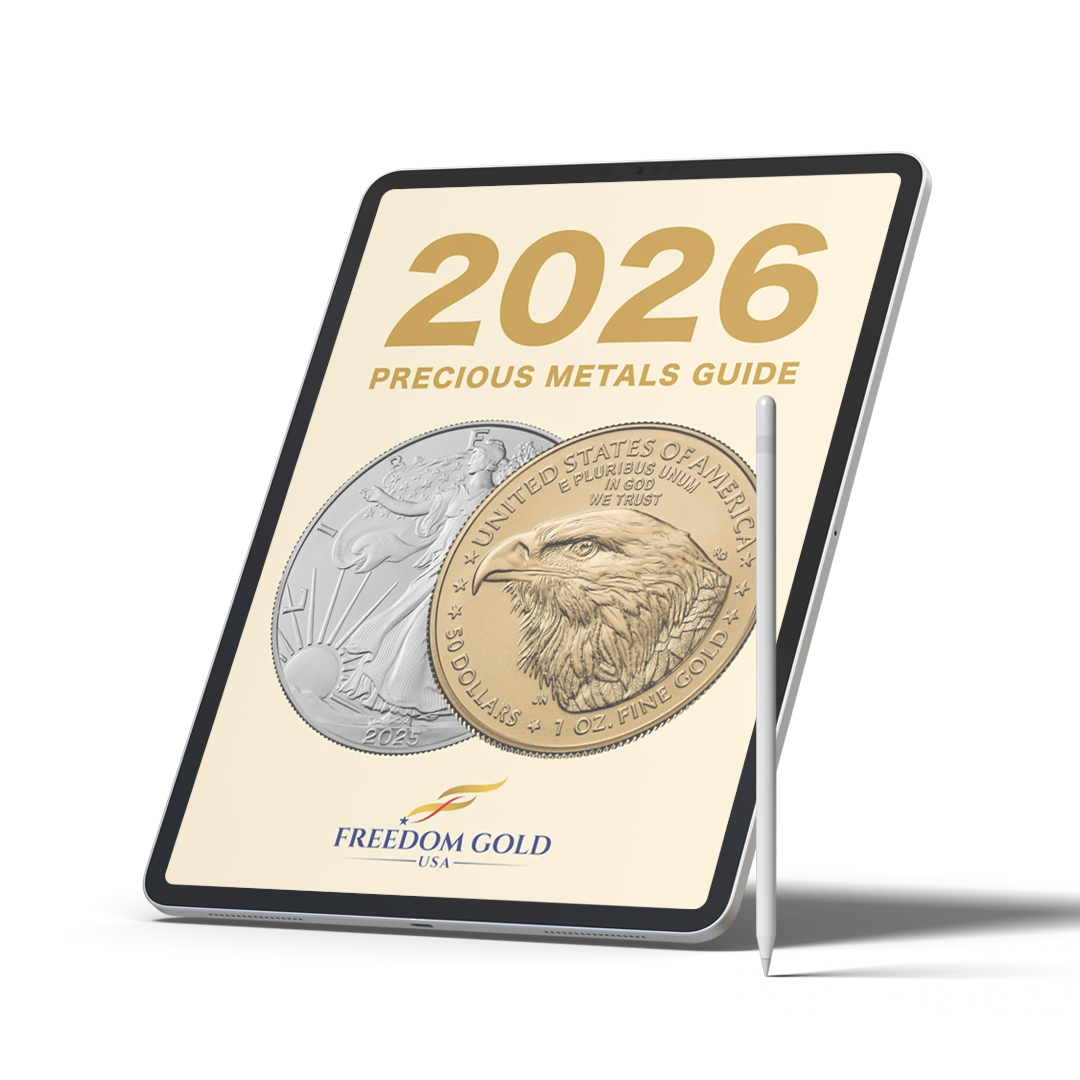
Once the rollover is complete and your self-directed IRA is funded, you work with our specialists to select your metals. Gold is the most common choice for TSP rollovers — we see a lot of clients allocating to Gold American Eagles, Gold American Buffalos, or Canadian Gold Maple Leafs. Silver is another option, and platinum is available for investors who want additional diversification.
The metals are then purchased at current market prices and transferred to an IRS-approved, insured depository. You own the metals. They are allocated specifically to your account — not pooled with other investors’ assets. You get statements, storage confirmations, and full visibility into your holdings.
Some clients ask about taking physical possession. Within a Gold IRA, IRS rules require the metals to be held by a qualified trustee or custodian. You cannot store IRA gold in your home safe. But when you reach retirement age and begin taking distributions, you have options: you can take an in-kind distribution of the physical metal, or liquidate and take cash. Our no-fee buyback program makes that exit clean and simple.
What Federal Employees Often Get Wrong About This Process
We have talked to clients who spent months sitting on the fence because they thought the rollover would trigger a tax bill. It will not — if it is done as a direct rollover through proper channels. That is the single biggest misconception we encounter.
The second misconception is that the TSP’s low-cost structure means you should never leave it. Look, the TSP’s expense ratios are genuinely impressive. But expense ratios are one data point. If your TSP assets are entirely in G Fund, F Fund, or lifecycle funds during a period of serious inflation, you may be preserving nominal value while losing real purchasing power. Gold has historically moved in the opposite direction of dollar weakness, which is precisely why clients come to us.
According to research published by World Gold Council data, gold has demonstrated a negative correlation with the U.S. dollar and positive performance during periods of high inflation — exactly the scenario many retirement investors are bracing for right now.
We are not telling federal employees to abandon the TSP entirely. Partial rollovers, where eligible, can make sense. The point is to understand what your options are, and make the decision with complete information rather than assumption.
Taking the First Step
A TSP rollover to a Gold IRA is one of the most consequential financial moves a federal employee can make in retirement planning. It is not complicated when you have the right guide. At Freedom Gold USA, we have walked clients through this exact process, and we know where the pitfalls are and how to avoid them.
If you are retired, separating from federal service, or simply want to understand your options before anything changes, call us at 888-901-5214 or download our free Investor’s Guide. A real specialist will walk you through the TSP rollover process with zero pressure and complete transparency.