Best Precious Metals to Buy During Inflation: Gold, Silver, and Platinum Compared
Inflation doesn’t announce itself politely. It shows up in your grocery bill, your energy costs, your rent, and quietly in the diminishing purchasing power of every dollar sitting in your savings account. When inflation accelerates, a lot of investors start asking the same question: which precious metals should I be buying right now?
We’ve fielded that question hundreds of times, and the honest answer is that it depends on your goals, your timeline, and how much of your portfolio you want in physical metals. Gold, silver, and platinum each have a distinct profile as inflation hedges. Here’s how we think about all three.
Why Precious Metals Work as Inflation Hedges
Before comparing the metals themselves, it helps to understand why they work as inflation protection in the first place. Unlike paper currency, precious metals cannot be printed. Their supply is constrained by geology and mining capacity. When central banks expand the money supply and inflation rises, each unit of currency buys less. But an ounce of gold buys roughly what it always has in real terms, a suit of clothes, a week of food, a barrel of oil.
This is not a theory. According to research from the International Monetary Fund, gold has maintained its real purchasing power over centuries and has served as one of the most consistent stores of value across inflation cycles. That track record is why central banks themselves hold gold as a reserve asset.
Physical metals also have no counterparty risk. They don’t depend on a company’s earnings, a government’s solvency, or a bank’s balance sheet. They simply exist.
Gold: The Cornerstone Inflation Hedge
Gold is the most established inflation hedge in the world, and it’s the foundation of most precious metals portfolios we help clients build. Its characteristics during inflationary periods are well-documented: when real interest rates turn negative (meaning interest rates minus inflation produce a negative return), gold historically performs very well.
Gold’s primary strength is its liquidity and universal recognition. It trades 24 hours a day in markets across every continent. Central banks hold it. Institutions trade it. Individual investors around the world understand its value. That global demand supports its price even during economic disruptions.
For retirement investors specifically, gold inside a self-directed IRA offers a way to hold this time-tested asset within a tax-advantaged structure. We’ve helped thousands of clients make this move, and gold remains the most common starting point for good reason.
The tradeoff is that gold doesn’t offer industrial demand upside. Its price is driven almost entirely by investment demand and monetary factors, which makes it more predictable but also limits some of the explosive upside potential that other metals can offer.
Silver: Dual Demand and Higher Upside Potential
Silver is often described as gold’s more volatile sibling, and that’s an accurate characterization. Silver functions as both a monetary metal and an industrial one, which creates a dual demand dynamic that gold doesn’t have.
On the monetary side, silver tracks gold’s movements reasonably closely during inflationary periods. On the industrial side, silver is a critical input in solar panels, electric vehicle batteries, electronics, and medical devices. Global demand for these applications is growing, which creates a structural demand floor that supports silver prices beyond just investment sentiment.
The gold-to-silver ratio, which measures how many ounces of silver it takes to buy one ounce of gold, has historically ranged from 40:1 to over 80:1. When the ratio is elevated, silver is historically undervalued relative to gold, and many experienced investors see that as a buying signal.
Silver’s higher volatility means it can outperform gold significantly during strong precious metals bull markets, but it can also decline more sharply during downturns. For investors who want precious metals exposure with more upside potential and who can tolerate some additional short-term price swings, silver is an excellent complement to gold.
We offer silver through both direct purchase and Precious Metals IRA options. You can explore our silver investment solutions and speak with one of our specialists about how silver fits into a diversified portfolio.
Platinum: The Rarer Metal with Industrial Muscle
Platinum is less frequently discussed in mainstream financial media, but it’s a metal we take seriously at Freedom Gold USA. It’s rarer than gold, harder to mine, and has significant industrial applications, particularly in automotive catalytic converters and emerging hydrogen fuel cell technology.
Historically, platinum traded at a premium to gold. Over the past decade, that relationship has reversed, and platinum has traded at a substantial discount to gold for an extended period. Many analysts view this as an anomaly that may correct as clean energy demand for platinum increases.
According to the World Platinum Investment Council, platinum supply is highly concentrated in South Africa and Russia, which creates supply-side constraints that can amplify price movements when demand increases. For investors looking at a longer time horizon of 10 to 20 years, platinum’s combination of scarcity, growing industrial demand, and current discount to gold makes it an interesting diversification play.
Platinum is best suited for investors who already have core gold and silver positions and want to add a third metal with a distinct demand profile. It’s not a replacement for gold’s stability, but it can add meaningful upside to a diversified precious metals allocation.
How We Help Clients Build a Balanced Precious Metals Portfolio
Most of our clients don’t put everything into a single metal. The most common portfolio structure we see is a core gold position supplemented by silver, with platinum as an optional third component for those with a longer horizon and higher risk tolerance.
The right allocation depends on your goals. Are you primarily trying to preserve purchasing power? Gold is your anchor. Do you want more upside potential? Silver adds that dimension. Do you have a long-term thesis on clean energy and industrial demand? Platinum deserves consideration.
We don’t push any single metal. Our education-first approach means we lay out the facts, walk you through the historical data, and let you make the call that fits your situation. Every client gets a one-on-one conversation with a dedicated account executive who understands your goals and timeline before recommending anything.
Protecting Your Wealth Starts with a Conversation
Inflation is not going away, and the best time to protect your purchasing power is before the next wave hits, not during it. The best precious metals to buy during inflation are the ones that match your specific financial situation, your retirement timeline, and your risk tolerance.
At Freedom Gold USA, we’ve spent more than 30 combined years helping Americans make these decisions with confidence. Whether you’re looking at direct purchases delivered to your home or building a precious metals IRA, we’re here to guide you every step of the way.
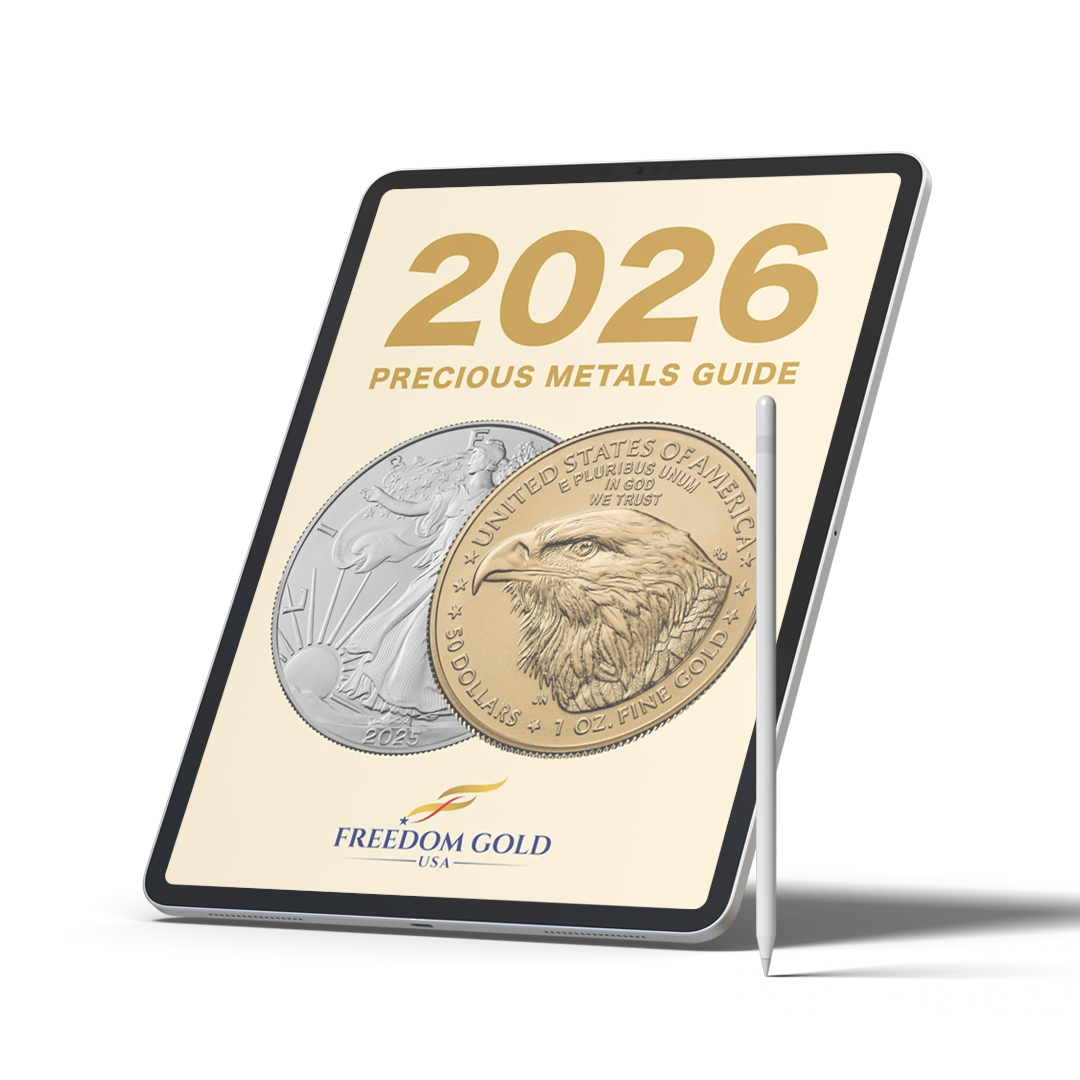
Download our free Investor’s Guide to learn how gold, silver, and platinum perform during inflation, or call us at (888) 901-5214 to speak with a specialist today.