Moving a six-figure balance out of a 401(k) and into physical gold is as much about structure as it is about the metal. A 401k gold IRA rollover of that size should almost always be handled as a direct transfer, coordinated between your plan administrator and a self-directed IRA custodian, with an allocation sized to your timeline rather than to the headlines. Get those three pieces right and the move is clean. Get one wrong and a single paperwork misstep can turn into a tax bill on money you meant to protect.
We wrote this for investors who already understand why they want physical precious metals in their retirement account and now want to know how to execute a larger rollover well. In plain terms, the core steps look like this:
- Confirm eligibility. Ask your 401(k) plan administrator whether your plan allows a rollover now.
- Open a self-directed IRA. The account is set up with a custodian that can hold physical metals, using the same tax type as the money you are moving.
- Request a direct rollover. Your plan sends the funds straight to the new custodian, not to you.
- Choose IRS-approved metals. Once the account is funded, you select eligible gold, silver or platinum.
- Ship to an approved depository. The metal is delivered to and stored in an IRS-approved depository in your IRA’s name.
For a walkthrough of the account itself, see our guide on how to open a Gold IRA account. Here we focus on the decisions that carry real weight when the dollar amount is significant.
Direct Rollover vs Indirect: Why Size Changes the Stakes
There are two ways money can leave a 401(k) on its way to a gold IRA. In a direct rollover, your plan sends the funds straight to your new IRA custodian. You never touch the money, nothing is withheld for taxes, and the transfer is reported as a nontaxable rollover. In an indirect rollover, the plan pays the money to you, and you then have 60 days to deposit it into the new IRA.
The indirect route sounds simple, but it has two traps that grow with the size of the account. First, employer plans are generally required to withhold 20% for federal taxes on an indirect distribution. To roll over the full amount, you have to make up that 20% from other savings within the 60 days, or the withheld portion is treated as a taxable distribution. On a $400,000 balance, that means finding $80,000 out of pocket and waiting until you file your return to get it back. Second, if you miss the 60-day window, the whole amount can become taxable income, and if you are under 59½, an early withdrawal penalty may apply on top of it.
For a larger account, that makes the direct route the cleaner choice in most cases. The IRS publishes its own rollover rules and a rollover chart on irs.gov if you want to see the official treatment for yourself. A few other points are worth checking before any larger rollover:
- Match the tax type. Pre-tax 401(k) dollars generally go to a Traditional self-directed IRA, and Roth 401(k) dollars go to a Roth self-directed IRA. Mixing them up creates a tax event you did not intend.
- Check whether your plan allows it now. Many employer plans only permit a rollover after you leave the company or reach a certain age, often 59½. Your plan administrator can confirm this in one phone call.
- Watch for company stock. If your 401(k) holds employer stock with large gains, there may be special tax treatment worth reviewing with your tax advisor before you move everything.
- Know the once-a-year rule. The one-rollover-per-12-months limit applies to indirect IRA-to-IRA rollovers. A direct rollover from a 401(k) is not counted against it, which is one more reason the direct route is cleaner.
How Custodian Coordination Works on a 401k Gold IRA Rollover
A gold IRA is a self-directed IRA, made possible by the Taxpayer Relief Act of 1997. It carries the same tax treatment as a Traditional or Roth IRA, but it can hold physical gold, silver and platinum instead of only stocks and funds. Because the metal has to be held by a qualified custodian and stored in an IRS-approved depository, three parties are involved: your current 401(k) plan, the new IRA custodian, and the dealer who supplies the metal.
This is where most delays happen. A 401(k) plan administrator may require its own distribution form, a signature, or a check made payable to the new custodian for your benefit. The new custodian needs your account opened and funded before any metal can be purchased. Then the metal needs to be bought, shipped and received at the depository. When those handoffs are not coordinated, funds can sit uninvested for weeks.
At Freedom Gold USA, your account executive coordinates with the custodian so you are not stuck relaying messages between institutions. We offer free Gold IRA setup, with no IRA setup fees, and we handle rollovers from 401(k), 403(b), TSP, Traditional IRA, Roth IRA and SEP IRA accounts. When done correctly, those rollovers move without taxes or early withdrawal penalties.
Once your metals are purchased, we provide free fully insured delivery to your IRA depository, with discreet packaging and tracking updates included. For a larger account, that insurance and tracking is not a small detail. It is the difference between hoping your metal arrived and knowing it did.
Sizing Your Allocation: How Much of the 401k Should Move
A rollover does not have to be all or nothing. You can roll over part of a 401(k) or IRA into a self-directed gold IRA and leave the rest where it is, or roll the full balance over and hold a mix of assets. For a six-figure account, the right answer usually comes from a few honest questions rather than a fixed percentage.
A few questions help frame the decision:
- What is the job of this money? Metals are held for protection and diversification: a hedge against inflation, currency weakness and stock market drawdowns. If part of your balance needs to produce income soon, that part may belong elsewhere.
- How close are you to required distributions? Required minimum distributions generally begin at age 73 for Traditional IRAs. You can satisfy them by selling some metal for cash or by taking metal out in kind, but planning for that now avoids forced sales later.
- What else do you own? A client with a large brokerage account, real estate and a pension is in a different position from someone whose 401(k) is the bulk of their net worth. Your existing holdings shape how much concentration makes sense.
- How would you feel in a bad year? Gold prices move. The right allocation is one you can hold through a dip without second-guessing the whole plan.
Some investors want a modest hedge alongside equities. Others, especially those worried about inflation and the dollar, want a larger share in hard assets. The right number is the one that fits your goals, your timeline and the rest of your portfolio.
Choosing Metals That Fit a Larger Account
Not every coin or bar can go into an IRA. The IRS sets fineness standards for IRA metals, and gold generally needs to be at least 99.5% pure, with a few specific exceptions such as the American Gold Eagle. Collectible and numismatic items are treated differently, so the metal in your rollover should be chosen for eligibility first and appearance second. Our explainer on gold IRA rules and IRS regulations goes into more detail.
For larger balances, the format of the metal matters for a practical reason: what happens when you eventually sell or take distributions. Bars tend to carry lower premiums per ounce, while widely recognized coins can be easier to sell in smaller pieces. Flexible formats such as the Valcambi CombiBar, a Swiss-made gold bar that breaks into smaller pieces, appeal to investors who want the option to sell partial holdings. A blend often makes sense for an account that will need to fund distributions over many years.
The exit matters as much as the entry. Freedom Gold USA has a no-fee buyback commitment that applies whenever you are ready to sell back. Our Best Price Commitment sits behind our motto, More Metal For Your Money, and on qualifying purchases we also offer bonus silver opportunities. On a six-figure purchase, those advantages add up to real ounces in your account rather than dollars lost to costs.
Frequently asked questions
How long does a 401k gold IRA rollover usually take?
Timing depends mostly on how quickly your 401(k) plan administrator processes the request and releases the funds. Some plans move in days, while others require extra forms or mailed checks that add time. Having your new account open and your paperwork ready before you call the plan helps keep things moving.
What happens if the 401k sends me a check instead of transferring the funds?
If the check is made payable to your new custodian for your benefit, it is usually still treated as a direct rollover, and you simply forward it. If it is payable to you personally, it is an indirect rollover: taxes may be withheld, and you have 60 days to deposit the full amount. Asking the plan how the payment will be made before you submit the request avoids that surprise.
Can I store the gold from my rollover at home?
Generally, no. Metals held in a gold IRA must be kept by the custodian in an IRS-approved depository. Taking IRA metal home yourself can be treated as a distribution, which may bring taxes and, if you are under 59½, penalties.
Are there ongoing costs after a gold IRA rollover?
Self-directed IRAs typically carry annual custodian and depository storage fees, which vary by provider. With Freedom Gold USA, the Gold IRA setup itself is free, with no IRA setup fees. Ask about ongoing costs during your consultation so you can plan for them alongside your allocation.
Start Your 401k Gold IRA Rollover With a Conversation
A well-structured 401k gold IRA rollover comes down to a direct transfer, careful custodian coordination and an allocation that fits your life. That is the kind of planning our consultation is built around. We start with a conversation, not a sales pitch. In a free one-on-one consultation, your account executive asks about your timeline, your retirement goals and your current holdings, then lays out how the rollover would work for your account.
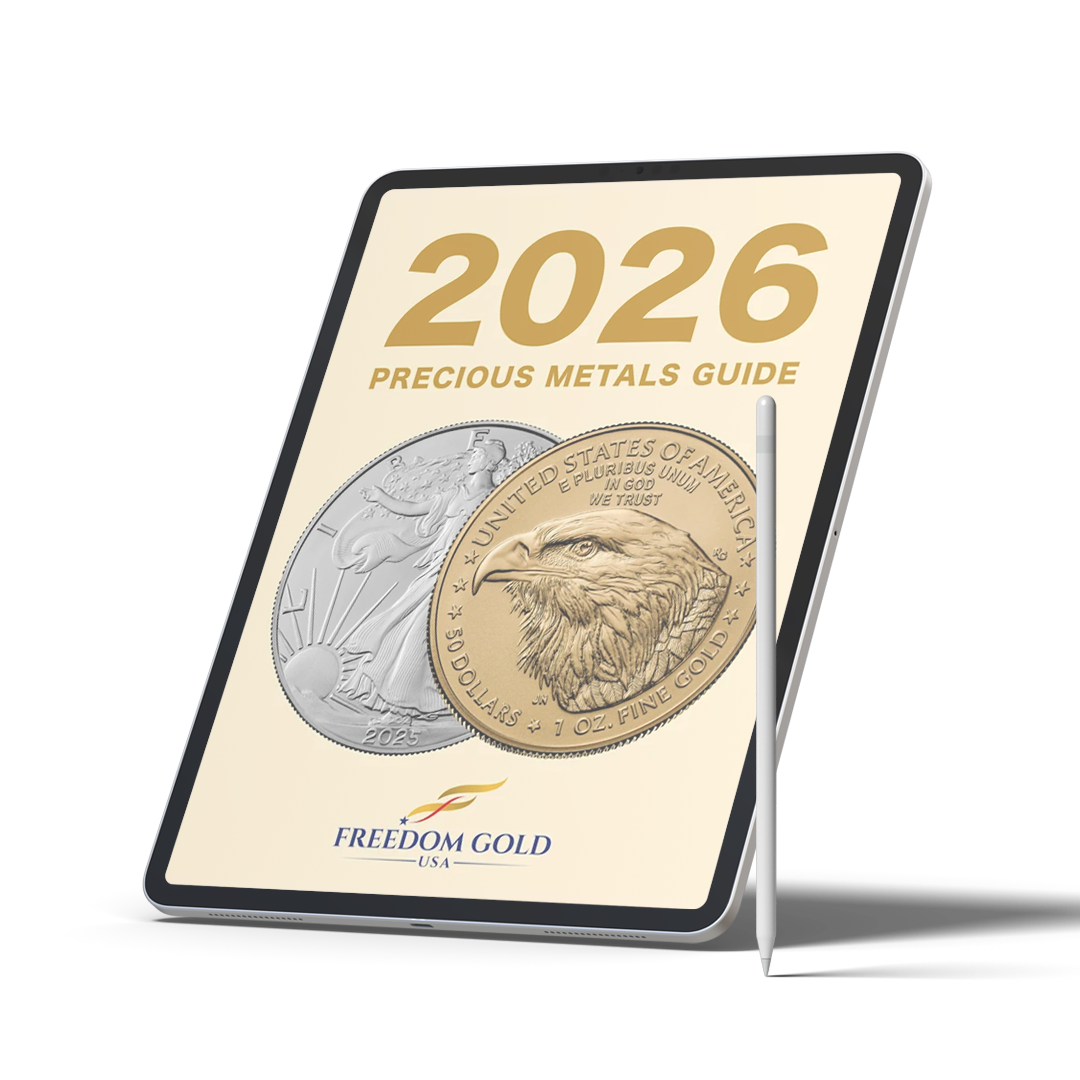
Freedom Gold USA is a family-owned business with over three decades of experience in precious metals, built on the values of God, family, country and freedom. Millions of Americans trust the work we do, and we are proud to be 5-Star Rated with Zero Complaints. Learn more about us on our home page, or speak with us directly to plan your rollover, and ask for your free precious metals investment guide when you do. Call (888) 901-5214.